


Comprehensive aesthetic and functional treatment planning
Complex restorative treatment does not begin in the dental chair. It begins on diagnostic models. We study your teeth, bite and smile in the context of your face, model the final result, and only then decide what needs to be done, in what order and to what extent.

Diagnostic models in the articulator: checking occlusal contacts
What you cannot see in the mouth, you can see on the model
In the chair, the patient is lying down, the tongue and cheeks are in the way, and the lower jaw instinctively steers around interfering contacts. Models mounted in an articulator show the bite from every side: from the inside, from behind, and in motion.
Many functional problems are first discovered at this stage. One example is a discrepancy between the stable position of the lower jaw (centric relation) and the way the teeth habitually close. Miss it, and new crowns will copy the old bite along with all of its problems.
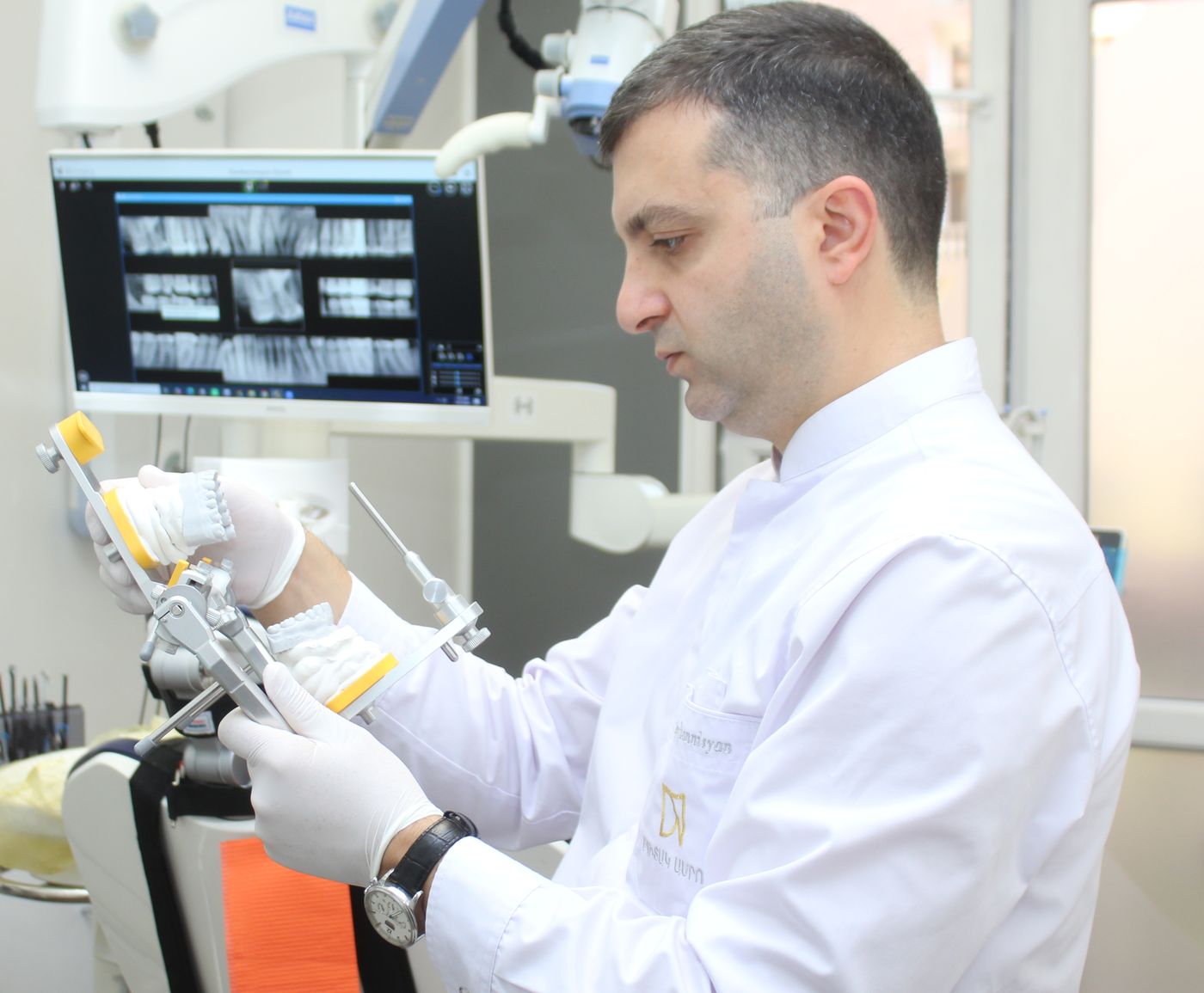
Models are analysed together with the radiographic series
The final restoration should be a copy of a plan that was modelled, tested and approved in advance. There is no room for improvising in the chair.
Digital and conventional: two workflows, one goal
We do not choose one over the other. In each case we use whichever tool gives the most accurate answer to the question at hand.
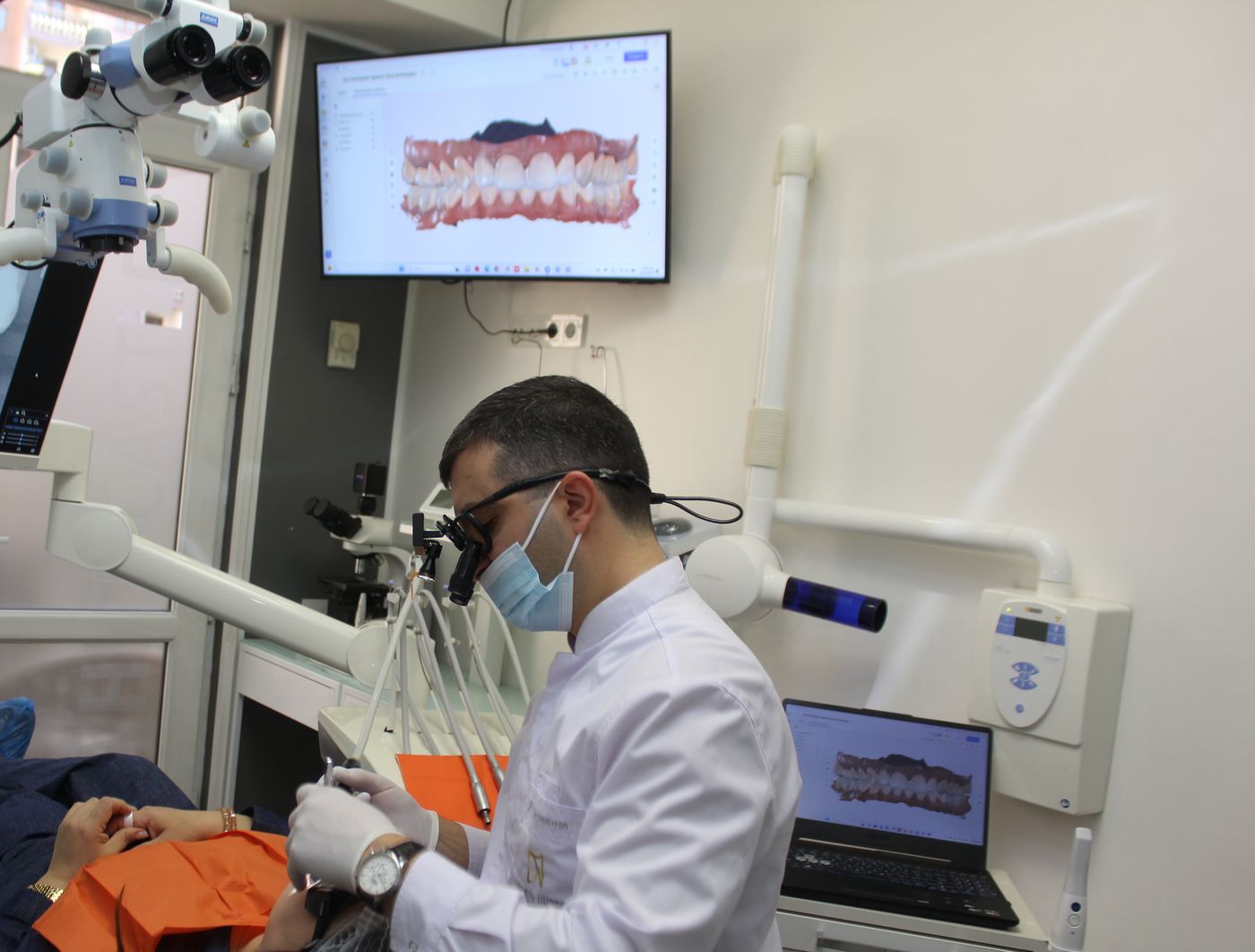
Digital workflow
- Intraoral scanning, no impression material
- 3D models and a virtual articulator
- Digital smile design based on facial photographs and video
- Radiographs and CBCT merged with the models
- Digital diagnostic wax-up with the dental technician

Conventional workflow
- Precise impressions and stone diagnostic casts
- Facebow transfer of the upper jaw position
- Centric relation record
- Movement analysis in a semi-adjustable articulator
- Diagnostic wax-up
A digital scan is fast and comfortable for the patient. A physical model in an articulator lets us feel the contacts by hand and check jaw movements step by step. In complex cases we combine both.
Four categories of risk
The plan is built on an internationally recognised risk-based approach developed at the Kois Center in Seattle. We assign a risk level in each category, and that level decides how extensive treatment needs to be and how often it should be monitored.
Periodontal
Is the foundation stable?
Gums and bone, inflammation, periodontal pockets. Without a stable periodontium, no restoration lasts.
Biomechanical
How much tooth is left?
Decay, cracks, old fillings and crowns. The aim is to keep as much natural tooth structure as possible.
Functional
How does the bite work?
Contacts, chewing muscles, the TMJ, wear, clenching and grinding.
Dentofacial
How do the teeth fit the face?
Tooth position relative to the lips and smile, proportions, length, gum line.
What diagnostic models reveal
Patients often cannot feel these problems. They are, however, what decides how long new restorations will last.
- Centric relation and habitual bite do not matchThe lower jaw slides to bring the teeth together, and the muscles stay under constant tension.
- Premature contactsOne tooth touches before the others and takes excessive load.
- No anterior guidanceDuring side-to-side and forward movements the back teeth do not separate, and they wear.
- Pathological wearThe result of parafunction, erosion or an unstable bite.
- Reduced vertical dimensionThe lower third of the face shortens and there is no room left for restorations.
- Occlusal plane deviationThe row of teeth is tilted or stepped, which affects both function and the smile.
- Tooth position problemsSometimes orthodontic movement requires less preparation than a crown.
How planning works
Eight steps from the first conversation to a written plan. In simpler cases some steps are combined; in complex ones, specialist consultations are added.
-
Consultation and expectations
We listen to your concerns and to what you would like to change, and review your medical history.
-
Records
A standard photo and video protocol, intraoral scan or impressions, radiographic series or CBCT, and a periodontal chart.
-
Facebow and bite registration
We transfer the spatial position of the upper jaw to the articulator and record the stable position of the lower jaw.
-
Functional and aesthetic analysis
We study contacts, movements, tooth axes and morphology, the space available for restorations and the parameters of the smile.
-
Diagnostic wax-up
Together with the dental technician we create the shape of your future teeth, in wax or digitally. It becomes the guide for the entire treatment.
-
Mock-up in the mouth
The modelled shape is transferred onto your teeth without any preparation. You see the result, talk, smile and tell us what to change.
-
Interdisciplinary review
Where needed, the case is discussed with an orthodontist, periodontist, gnathologist, surgeon and dental technician.
-
Written phased plan
Options, sequence, timelines and cost. Treatment appointments are booked only after you approve it. How we build a treatment plan
Who we bring into the planning
A complex case is rarely a single-specialty problem. Each specialist joins when their decision changes the plan.
Orthodontist
When moving teeth can replace preparation or create space for a restoration.
Periodontist
When the periodontium needs stabilising, the gum line needs correcting, or clinical crown lengthening is required.
Gnathologist
When there are TMJ symptoms, muscle pain or pronounced parafunction.
Dental technician
For the diagnostic wax-up and for choosing the material, shape and shade of the future restorations.
Endodontist
When the prognosis of a tooth depends on the state of its root canals.
Oral and maxillofacial surgeon
When the plan includes extractions, implants or bone procedures.
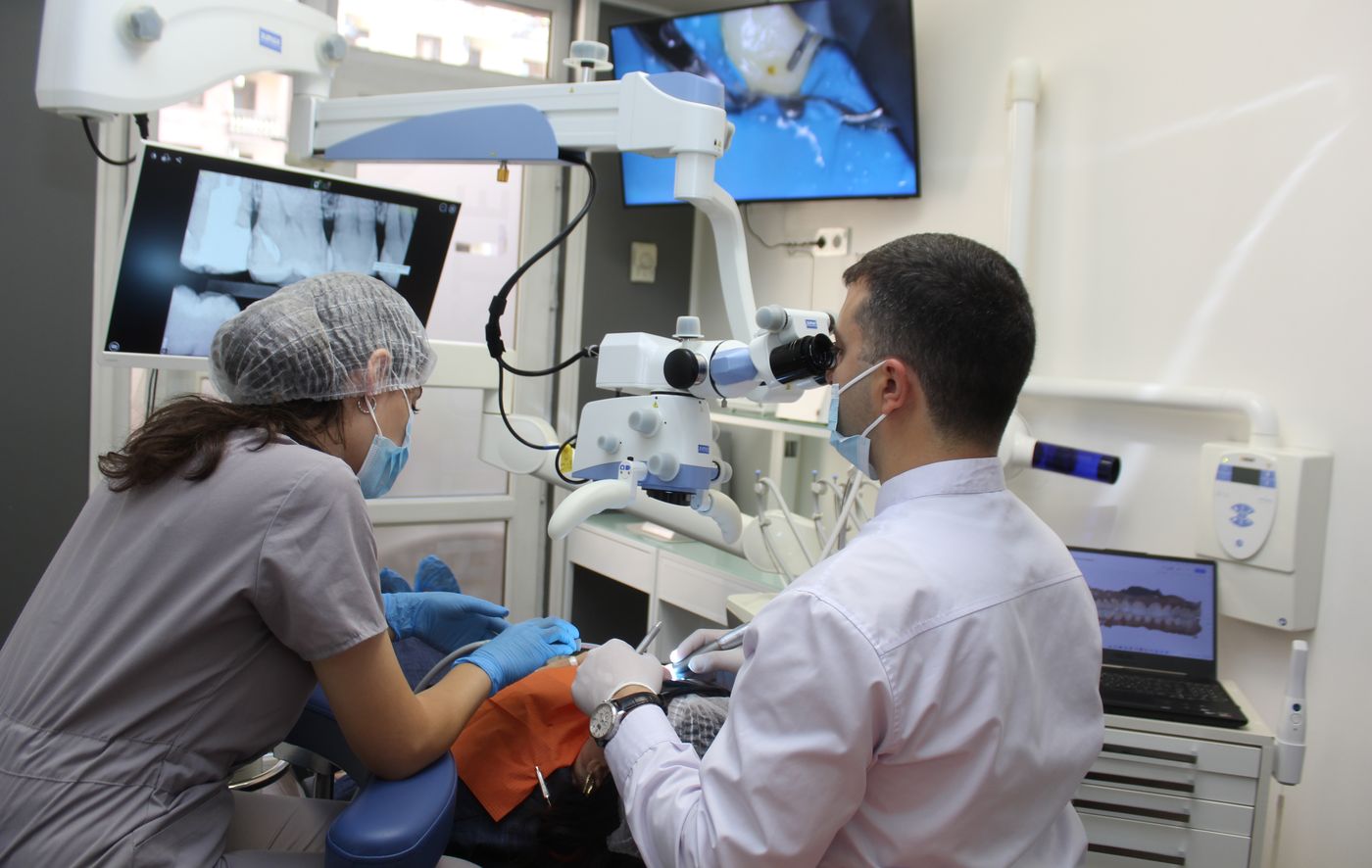
All diagnostic data is available at the chairside
When comprehensive planning is needed
- Several crowns or veneers on the front teeth
- Full-mouth rehabilitation
- Significant tooth wear, grinding
- Implants in the aesthetic zone
- Orthodontic treatment to be followed by prosthodontic work
- A gummy smile or an uneven gum line
- Pain or clicking in the jaw joint
- Dissatisfaction with previous restorations
A single filling or a single crown does not usually need this level of work. A standard diagnostic visit and treatment plan are enough.
What you receive at the end of planning
- A photo and video record for before-and-after comparison
- Digital and/or stone diagnostic models
- A diagnostic wax-up showing the shape of your future teeth
- A mock-up try-in in your mouth, with photographs
- A diagnostic summary across the four risk categories
- A written plan with options, phases, timelines and cost
- A follow-up maintenance and monitoring programme
Who coordinates the planning

Planning is coordinated by Dr. David Hovhannisyan, founder and clinical director of White Castle Dental Clinic. He gathers all the records, works with the dental technician on the wax-up, brings in the specialists the case needs, and is accountable for the final plan.
He has completed two clinical residencies at Mkhitar Heratsi Yerevan State Medical University, in family dentistry and in prosthodontics. His main fields include prosthodontics and full-mouth rehabilitation, digital dentistry and treatment planning.
Frequently asked questions
Why not just start with the crowns?
You can, but without a plan new crowns copy the old bite along with its problems. If the teeth wore down or broke for a functional reason, the same reason will act on the new restorations. Planning prevents doing the work twice.
Does a mock-up require preparing the teeth?
No. A mock-up is a thin layer of temporary material placed over the teeth without any preparation and removed easily. It lets you see and test the result before any irreversible step.
How long does planning take?
It depends on the complexity of the case. Usually 2–3 visits and a few days of laboratory work. Interdisciplinary cases can take longer because of specialist consultations.
Which is better, digital or conventional?
They complement each other. A digital scan is quick and convenient, while a model in an articulator allows detailed analysis of jaw movements. The choice depends on the clinical question.
What is a facebow, and why is it needed?
It is a device that records the position of the upper jaw relative to the skull and the jaw joints. Thanks to it, the models in the articulator move the way your jaws do. It is painless and takes a few minutes.
Can I change the plan after the mock-up?
Yes, that is exactly what it is for. We adjust shape, length and proportions until the result meets both your expectations and the functional requirements.
Why involve other specialists?
Because sometimes the shortest route to a good result goes through another specialty. A few months of orthodontic treatment, for example, can significantly reduce how much tooth needs to be prepared. We choose the option that best preserves your own tissues.
Start with a plan, not with a drill
Book a planning consultation. We will discuss your expectations, assess the situation and tell you which stages your case actually needs.
White Castle Dental Clinic · +374 12 336699 · 6/1 Nikoghayos Adonts St., Yerevan 0014, Armenia